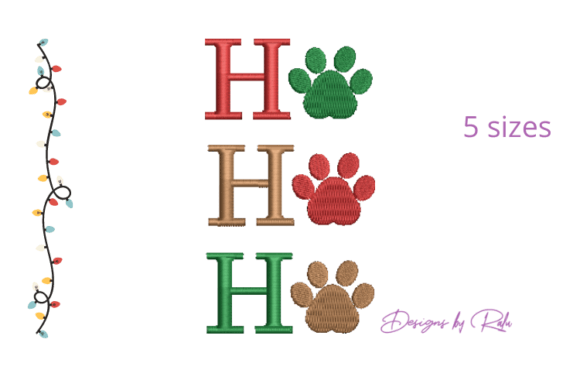
Ho Ho Ho Paw Santa Claus Christmas
As a professional embroidery designer who has spent years refining digital files for commercial production, I approach every new asset with a critical eye. When evaluating the Ho Ho Ho Paw Santa Claus Christmas design, I am not just looking at how cute it is; I am analyzing its viability as a core component of small business merchandise and branded patch use. This review focuses on how this machine embroidery design performs in real-world scenarios for boutique owners, Etsy sellers, apparel decorators, and creative studios.
First Impressions: A Playful Yet Professional Brand Asset
The immediate visual personality of Ho Ho Ho Paw Santa Claus Christmas strikes me as distinctly friendly and playful without sacrificing professionalism. In the crowded marketplace of holiday goods, designs that feel too childish often fail to command respect from adult consumers. However, this design manages to balance the whimsy of a paw print with the classic recognition of Santa Claus. It feels like a premium handmade product rather than a generic clipart image.
For a brand identity, this duality is crucial. Whether you are running a pet bakery, a cozy café, or a handmade softie shop, this design offers a warm, inviting aesthetic that suggests quality care. The description highlights its versatility for candy bags, pillows, stuffies, softies, tote bags, and Christmas stockings, which tells me the stitch structure likely balances detail with open space. This balance is essential for maintaining legibility and structural integrity when the design is scaled down for smaller applications like cap embroidery or chest logo accents.
Real-World Business Applications and Versatility
In my experience, the true test of an embroidery file is its adaptability across different substrates. Ho Ho Ho Paw Santa Claus Christmas presents itself as a highly versatile choice for various commercial projects. For staff uniforms, this design could serve as a delightful accent on apron embroidery for a coffee shop or bakery during the holiday season. It adds a personal touch that customers appreciate, fostering a sense of community and seasonal spirit.
Consider the potential for custom apparel and branded patches. Small businesses often rely on embroidered patches to create a cohesive look across their team. Placing this design on the sleeve of a work shirt or as a standalone patch on a denim jacket can elevate the perceived value of the garment. It transforms a standard uniform into a piece of branded merchandise that employees are proud to wear. Furthermore, for tote bag design, the festive nature of the file makes it an excellent add-on for holiday pop-up markets or craft fairs, where shoppers are actively looking for unique, seasonal items.
The design also shines as a customer gift or event merch. Imagine offering a limited edition run of embroidered pillow covers or softies featuring this motif. These items act as tangible extensions of your brand, keeping your name in the customer's home long after the holidays are over. For Etsy branding, using this file to create printable mockups allows sellers to visualize the finished product before committing to production, ensuring the final output matches the marketing promise.
Critical Considerations and Strategic Limitations
While the design is promising, a responsible designer must identify where caution is required. Not every surface is suitable for every embroidery file. When considering cap embroidery, one must be mindful of the curved surface. If the design contains intricate details or high stitch density, it may pucker on the tight curve of a baseball cap unless stabilized perfectly. Similarly, applying this to small patch sizes requires scrutiny; if the lettering in "Ho Ho Ho" becomes too thin or the paw details merge together, the design loses its impact.
Fabric texture plays a significant role in the success of this project. On textured fabrics like heavy canvas or bouclé wool, fine outlines might get lost. Conversely, on dark uniforms, thread colors must provide sufficient contrast to ensure the white or light elements of the Santa figure remain visible. Items that require frequent washing, such as aprons or work shirts, demand robust stitching techniques. If the design relies heavily on satin stitches that are prone to snagging, it may degrade quickly under industrial laundering conditions.
Additionally, tiny lettering is a common pitfall in digital embroidery files. Before mass producing branded product labels or tags, you must verify that the text remains legible. If the design is intended for a chest logo accent, ensure it does not compete visually with other brand elements. The goal is harmony, not clutter. Always inspect spacing and confirm hoop size limitations to avoid distortion, especially if you plan to use this for digital embroidery file assets that will be licensed to others.
Impact on Brand Identity and Customer Trust
The quality of your embroidery directly influences buyer engagement and product value. A well-executed Ho Ho Ho Paw Santa Claus Christmas design signals attention to detail. Customers associate crisp, clean stitching with a reputable business. When a shopper sees a neatly embroidered patch on a tote bag or a flawless design on a holiday stocking, they perceive the entire brand as trustworthy and professional.
This design contributes to visual consistency, which is vital for building a recognizable brand. By integrating this file into your suite of design assets, you create a unified aesthetic across all touchpoints, from packaging accents to social media imagery. The handmade presentation of a physical embroidery piece adds emotional weight to the transaction, making the customer feel connected to the creator. In a market saturated with printed goods, the tactile nature of embroidery sets your small business merch apart, creating a lasting impression that drives repeat purchases.
Practical Designer Notes for Production Success
To ensure the highest quality results, I recommend following a rigorous testing protocol before launching any commercial embroidery project. First, test the design in black and white to evaluate the stitch density and overall shape without the distraction of color. This helps identify potential areas where threads might crowd each other.
Next, check if it works effectively at the smallest intended patch size. Create a mockup for client approval to manage expectations regarding scale and placement. Review thread color contrast carefully; the right combination of reds, whites, and blacks is essential for the Santa theme to pop against various backgrounds. Inspect the spacing between elements to prevent thread breaks and ensure the design flows naturally.
Confirm the recommended hoop size and always test on the actual fabric you intend to use. Using the proper stabilizer is non-negotiable; it provides the foundation needed to support the design and prevent puckering. Compare this file beside other design assets in your library to ensure it aligns with your current style guide. Finally, and most importantly, confirm commercial licensing before using this digital embroidery file for business use. Ensure you have the rights to sell products featuring this design, whether you are creating custom apparel, branded patches, or selling the file itself.
By approaching Ho Ho Ho Paw Santa Claus Christmas with these technical considerations in mind, small business owners and designers can maximize its potential. It is more than just a festive graphic; it is a strategic tool for enhancing brand identity and delivering high-quality finished products that resonate with customers during the holiday season.