Review: Boy Caught the Mouse for Small Business Merch
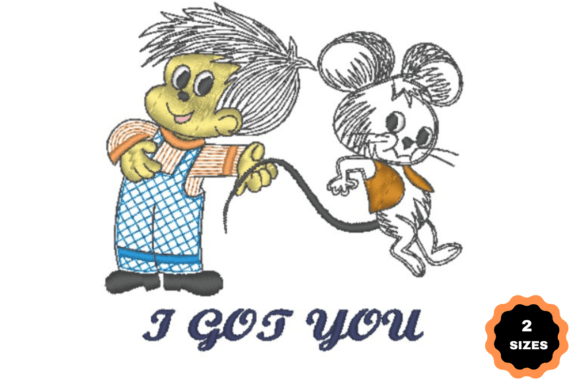
As a professional embroidery designer who has spent years refining machine embroidery design for commercial use, I often receive requests to evaluate new assets before they are deployed in high-volume production. Today, I am reviewing a specific digital asset titled Boy Caught the Mouse. The product description promises an "adorable" look that gives fabrics an "extraordinary" appearance, suggesting a playful yet premium aesthetic suitable for various applications. For small business owners, Etsy sellers, and apparel decorators looking to elevate their small business merch, understanding the nuances of this embroidery file is critical.
First Impressions and Brand Personality
When I first encountered the title Boy Caught the Mouse, my immediate reaction was one of whimsical charm. In the world of branding, few concepts evoke as much warmth and approachability as a child interacting with nature or animals. This design feels inherently friendly, rustic, and handmade. It does not scream corporate rigidity; instead, it whispers creativity and authenticity. For brands like bakeries, florists, creative studios, or pet boutiques, this visual personality aligns perfectly with a desire to appear accessible and trustworthy.
The description emphasizes that this design brings an "extraordinary look" to any fabric. From a design standpoint, this suggests a balance between detail and clarity. However, as a designer, I know that "adornable" does not always mean "production-ready." The success of Boy Caught the Mouse in a real-world scenario depends entirely on how well the stitch density and thread colors translate from a screen to a physical surface. If executed correctly, this piece can serve as a powerful anchor for brand identity, signaling to customers that the business cares about quality and unique presentation.
Real-World Applications for Branded Merchandise
The versatility of this design makes it a strong candidate for diverse commercial embroidery projects. Let us imagine a local coffee shop or a boutique bakery wanting to launch a line of branded goods. They could utilize Boy Caught the Mouse as a primary logo element on staff uniforms. A chest pocket placement would offer a subtle, professional accent without overwhelming the wearer. Alternatively, for a more casual vibe, placing the design on the back of a work shirt or the front of a durable apron creates a memorable visual statement.
For event merchandise and customer gifts, this design shines. Imagine a tote bag design featuring this motif alongside the business name. The narrative of a boy catching a mouse implies a story, which can engage customers emotionally. It transforms a simple canvas bag into a conversation starter. Similarly, for cap embroidery, the rounded shape of a baseball cap provides a curved canvas where a character-focused design like this can sit comfortably, provided the scale is adjusted correctly.
Small patch creation is another area where Boy Caught the Mouse excels. A sew-on patch featuring this scene can be applied to denim jackets, beanies, or even product packaging accents. When used on handmade product labels, it adds a layer of perceived value to the finished product. Customers often associate detailed embroidery with higher quality, making them more willing to pay a premium for items that feature such thoughtful design assets.
Critical Considerations and Potential Pitfalls
While the potential is high, every experienced designer knows that context is king. There are specific scenarios where Boy Caught the Mouse requires careful evaluation. One major concern is the size of the final output. If the design includes fine details, attempting to shrink it down to a tiny patch size or a small sleeve detail may result in a muddy, indistinct image. Embroidery relies on stitches, and if the stitch count is too high for the available space, the fabric will pucker, ruining the finished product.
Fabric texture also plays a pivotal role. On smooth, tightly woven cotton, the design will likely render beautifully. However, on textured fabrics like heavy canvas, fleece, or loosely knitted materials, the definition of the mouse or the boy might get lost. Furthermore, dark uniforms present a challenge. Without proper underlay and thread contrast, light-colored details in the design may disappear against a black background. High stitch density is another factor to monitor; if the design is too dense, it becomes stiff and uncomfortable, particularly for items like caps or aprons that require flexibility.
Impact on Brand Identity and Customer Trust
Choosing the right digital embroidery file is not just about aesthetics; it is about communication. Boy Caught the Mouse communicates a brand that values storytelling, playfulness, and a human touch. When a customer sees this design on a tote bag or a uniform, it reinforces a sense of community and approachability. This visual consistency builds customer trust and recognition over time.
In the competitive landscape of custom apparel and Etsy branding, standing out is essential. A generic logo fades into the background, but a unique character design like this captures attention. It elevates the perceived value of the item, making the buyer feel they are purchasing something special rather than mass-produced. For craft businesses, this level of detail signals professionalism and dedication to the craft, which directly influences buyer engagement and repeat sales.
Practical Designer Notes for Production
Before committing to a full production run, I strongly advise following a rigorous testing protocol. First, test the design in black and white to ensure the composition holds up without relying on color contrast. Next, review the thread colors carefully; the palette must complement the target fabric while maintaining visibility. Inspect the spacing within the design to ensure no elements are too close together, which could cause thread breaks.
Hoop size is a technical necessity that cannot be overlooked. Ensure the design fits within your standard hoop dimensions to avoid shifting during stitching. Always use a proper stabilizer matched to the fabric weight; this is crucial for preventing puckering, especially on delicate materials. Creating a printable mockup for client approval is also a vital step. This allows stakeholders to visualize the design on the actual product before any money is spent on production.
Finally, compare this design beside other assets in your library to ensure it maintains visual consistency across your brand. Most importantly, confirm the commercial licensing terms before using Boy Caught the Mouse for any branded product add-on. While the description mentions multiple embr (likely referring to multiple embroidery formats), you must verify the exact file formats, stitch counts, and usage rights to avoid legal issues. By taking these precautions, you ensure that your investment in this adorable design pays off in high-quality, professional results.